.jpg)
How can we help students to LOVE reading?
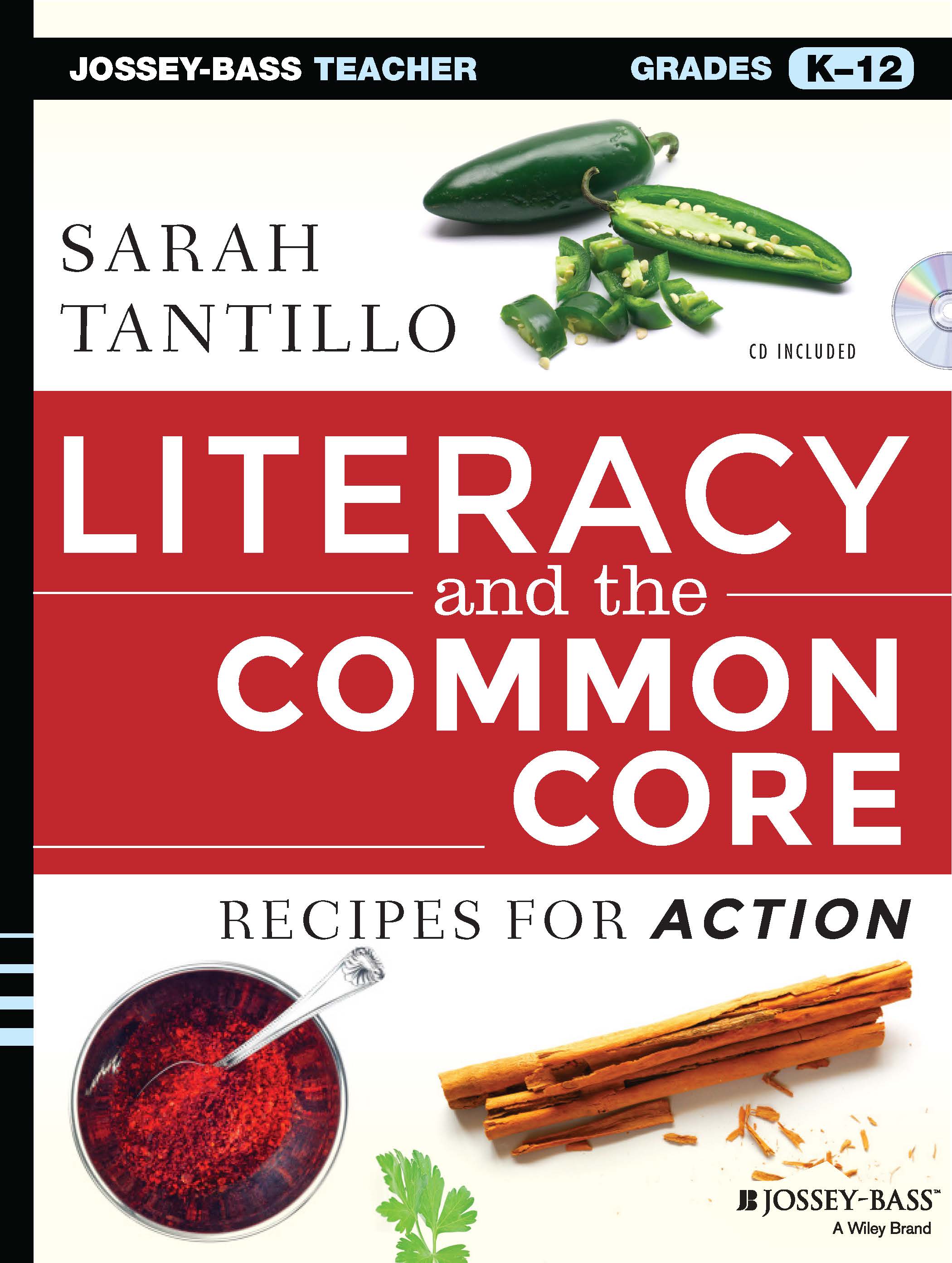
One approach is to implement a school-wide independent reading program. But it is not as simple as it sounds. Some schools have attempted this hastily and failed. However, some have planned carefully and succeeded. You will need to provide ample resources and support for teachers, students, and parents. You will also need incentives and accountability measures. Check out the SRT (Strategic Reading Time) Users' Manual (which is explained in more detail in my book Literacy and the Common Core: Recipes for Action) for a comprehensive program you might want to use with your school. Make sure you also download the SRT Reading Tracker-Worksheets 1 and 2 and Intro to SRT PowerPoint, and SRT Expanded Reading Prompts and Sample Break-up Letters, as well.
 Also, consider these questions:
What do you already know about your students' reading habits and interests?
Here's a great reading interest survey adapted from Donalyn Miller's Book Whisperer, originally found here.
What should students read for “Independent Reading”? Where can we find good books?
- Students should read books that are “just right”—i.e., books that they can read and understand without assistance.
- Check out the Recommended Reading page for tips on where to find good books!
- Check out Goodreads.com. This article ("Get to Know Goodreads: Share this primer to the social reading site and help teachers and kids connect with great books" by Travis Jonker) explains how the Website works and how it can be useful to teachers and students (aged 13 and up) alike.
- NPR conducted a poll of teens, and here are the "100 Best-Ever Teen Novels." (Thanks to Tricia Lindstedt for this lead!)
- For younger students, check out this fun list: "67 Books Every Geek Should Read to Their Kids Before Age 10" (Thanks to Allison Dent, one of my former students I am proud to say, for this lead!).
- For boys, check out the Boy Book of the Month and Books for Boys, both curated by Jim Nicosia (Thanks to Gregg Festa, Sr., for this lead!).
- Also, check out Popular Young Adult Books featured on Goodreads.
- This one came recommended by a student: "Sofa Adventures: Reading Lists for Kids." You don't have to buy a sofa, and the book recommendations come with blurbs. (Thanks, Susan and Mary Lowe!)
- GoodReads is another great source of book ideas. Here is a GoodReads recommended list for middle school students.
- What Should I Read Next provides recommendations based on titles you enter. Super-helpful! (Thanks to Shannon Marshall at Great Oaks CS for this lead!)
- Success in the Middle: Books for Middle Schoolers provides links to a handful of helpful sites.
How can they tell if a book is “just right”?
- See “5-Finger Rule Poster” in the Download Zone.
- Teachers should also make students aware of their reading level early in the year and help them identify books based on that reading level; they should help students monitor their reading levels throughout the year. See Guided Reading page for more information on how to assess and track student reading levels. See Recommended Reading page, too.
How can we inspire students to fall in love with books?
- Teachers at Paterson Charter School for Science and Technology (PCSST) designed a course called "STRATEGIC READING & WRITING," a semester-long elective meant to help students fall in love with reading. So far, the results have been remarkable. Here are some of the fun, creative ways that teachers have hooked students on reading: "Book Commercials"... "Response Journals or Break-up Letters"... "Speed Dating with a Book" ... "Weekend Date with a Book." Many thanks to Allison Miller and Tricia Lindstedt for these contributions! PS-- Another handy tool for this work is the Journal Writing Rubric. PS--For a quick look at Speed Dating with a Book, check out this video of Allison Miller and her students in action! For an overview of the course, check out the STRATEGIC READING & WRITING-Curriculum Overview Map. For more detailed unit plans, see STRATEGIC READING & WRITING-9th Grade Unit Plans.
- NPR offers a special series called Three Books, where reviewers recommend three books on a given theme. This might be a useful model for students to imitate.
How much should students read? How should this amount be framed: Nightly? Weekly?
- Some schools advocate 15-20 minutes per night, some 1-2 hours per week. PS--Giving students time to read during the day will inspire them to read more at home. Whatever you decide, it should be a school-wide policy to ensure consistency.
Which teacher is responsible for keeping track of independent reading homework?
- Specify role by grade—e.g., literacy teacher or homeroom teacher?
How will we integrate independent reading into the school day?
- Yes/No? Will you use DEAR (Drop Everything and Read) in the schedule? Something else? Different by grade? Should literacy teachers allocate a set number of minutes per day/week during class?
How will we assess students’ independent reading?
- Reading logs: Do you have a particular format you want people to use? See various samples in the Download Zone.
- Reading response questions: See “103 Things to Do Before, During, After Reading” by Jim Burke, “Reading Response Questions” by Nancy Patterson, and “Student Reading Response Journal Questions” by Leslie B. Preddy in the Download Zone.
- Periodic 1-on-1 conferences
- See Book Talk Project page.
- Short speeches about the main characters, the conflict, why you like this book, or how this book compares to others you’ve read by the same author, in the same genre, or on the same topic.
- Book letters/notes (between student/teacher or student/student in a notebook, like a correspondence journal).
- Check out 180 Ways to Respond to Independent Reading (a FREE download). Many thanks to Barbara Daniels for contributing this incredibly helpful set of ideas!!!
What should the reading log include?
- Author, title, genre, pages read, minutes read, place for parent to sign=DEFINITELY
- Space for students to summarize/reflect=MAYBE. It depends on how else you will assess students’ reading. For example, if you give a weekly independent reading quiz (in which students have to answer generic questions), then they don’t have to write something every night. Or, you could have them write a summary after every 30 pages or once a week when they hand their logs in.
How should parents be involved in students’ independent reading? How can we support parents in these efforts?
-
Provide a letter home to parents about this independent reading initiative. Train them in how to fill out the reading log and their role in it. Also, if possible, discuss reading during parent meetings and provide some modeling/training in how to talk to children about books.
-
Parents should sign the reading log. (What will you do if they don’t?)
-
Parents should read aloud to their children in kindergarten; children in other grades can read on their own.
-
Parents should be encouraged to read the same book as their children so they can talk about it.
-
Parents should ask generic questions about the reading. See “Ways You Can Help Your Child With Reading at Home” by Katy Wischow in the Download Zone.
-
Here's a great Website with books (some free!) that kids can read along to: http://www.meegenius.com/
What should we do about SUMMER READING? Check out this blog post!
Here's a helpful blog with "Five Ways to Celebrate Summer Reading" by Alycia Zimmerman. She makes reference to Scholastic's Recommended Summer Reading Lists for 8-10 year-olds and 10-12 year-olds.
Here's another helpful blog by Donalyn Miller, who wrote The Book Whisperer, which I also recommend! The book explains how she enables her students to fall in love with reading and read 40 books a year. Also, check out the Recommended Reading page on her Website, which she updates frequently.
Here's a link to the 2012 Top 10 Summer Reading Lists for Kids and Teens (Books for Elementary, Middle, and HIgh School Students) assembled by Elizabeth Kennedy at About.com.
Here's a FREE SUMMER READING PACKET, perfect for use with middle and high school students! See an updated version in the Download Zone.
Also, although this list was originally compiled for ELA curriculum writers, it also includes texts that would fit nicely in summer reading: Selected Texts for Grades 4-12 ELA, 5-11-15.
IN THE DOWNLOAD ZONE for Independent Reading:
- 5-Finger Rule Poster
- Reading Log for K-5
- Reading Log—no writing, easy to add minutes
- Reading Log—just data, no writing-Laura Candler
- Reading Log—with summary or reflections-Laura Candler
- “103 Things to Do Before, During, After Reading” by Jim Burke
- “Reading Response Questions” by Nancy Patterson
- “Student Reading Response Journal Questions” by Leslie B. Preddy
- “Ways You Can Help Your Child With Reading at Home” by Katy Wischow
- SAMPLE SUMMER READING PACKET
- STRATEGIC READING & WRITING-Book Commercials
- STRATEGIC READING & WRITING-Response Journals or Break-up Letters
- STRATEGIC READING & WRITING-Speed Dating with a Book
- STRATEGIC READING & WRITING-Weekend Date with a Book
- STRATEGIC READING & WRITING-Curriculum Overview Map
- STRATEGIC READING & WRITING-9th Grade Unit Plans
- Journal Writing Rubric
- SRT Users' Manual, 6-27-14
- SRT Reading Tracker-Worksheets 1 and 2
- Intro to SRT PowerPoint
- SRT Expanded Reading Prompts and Sample Break-up Letters
- Selected Texts for Grades 4-12 ELA, 5-11-15
- SUMMER READING PACKET-novel-narrative rev 2017